
Last updated November 15, 2026
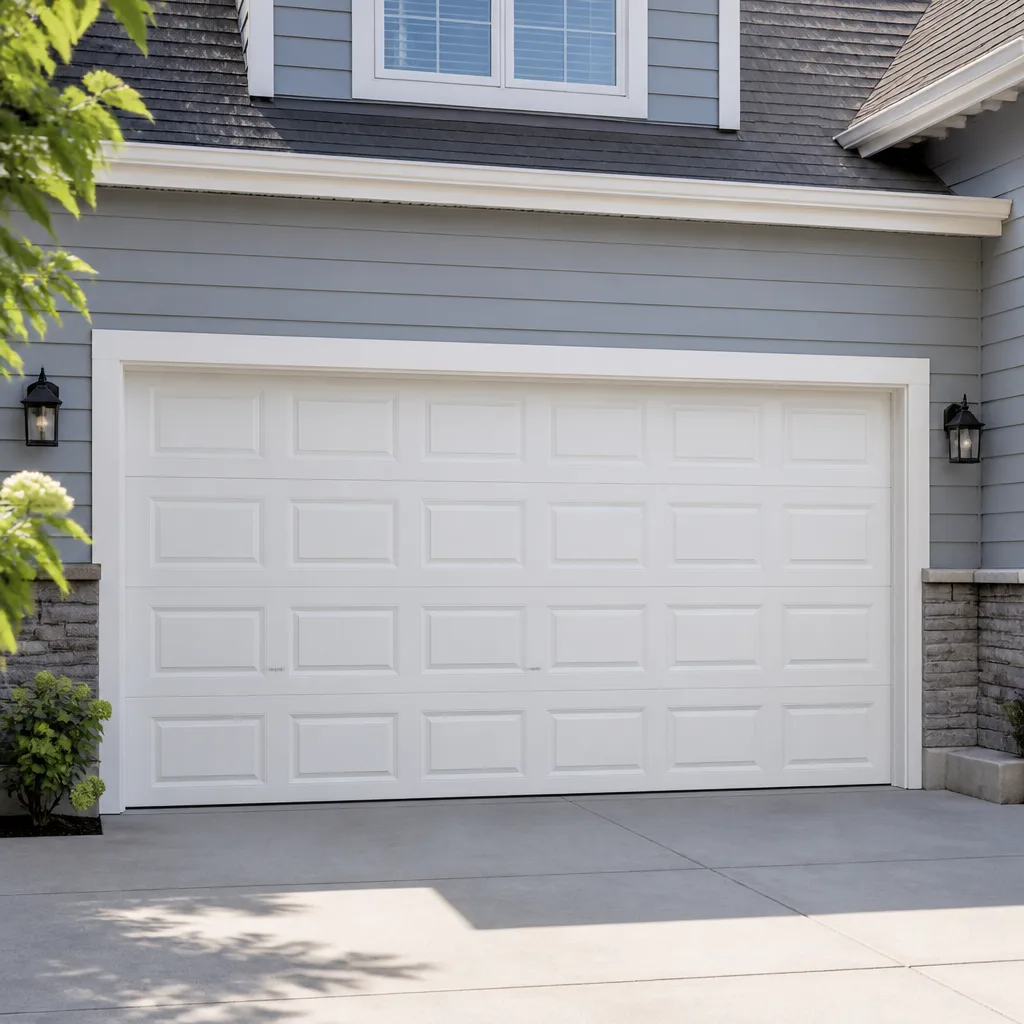 Raised-panel steel
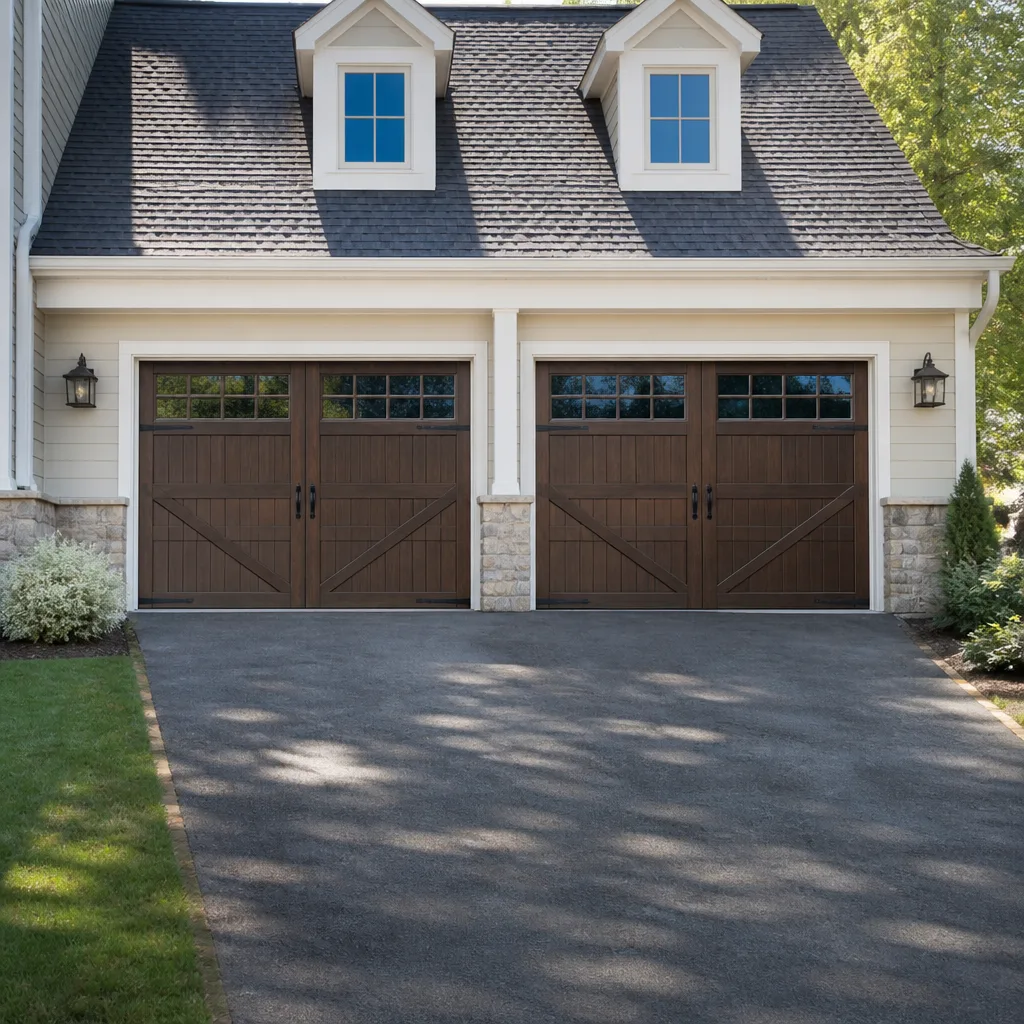 Carriage house
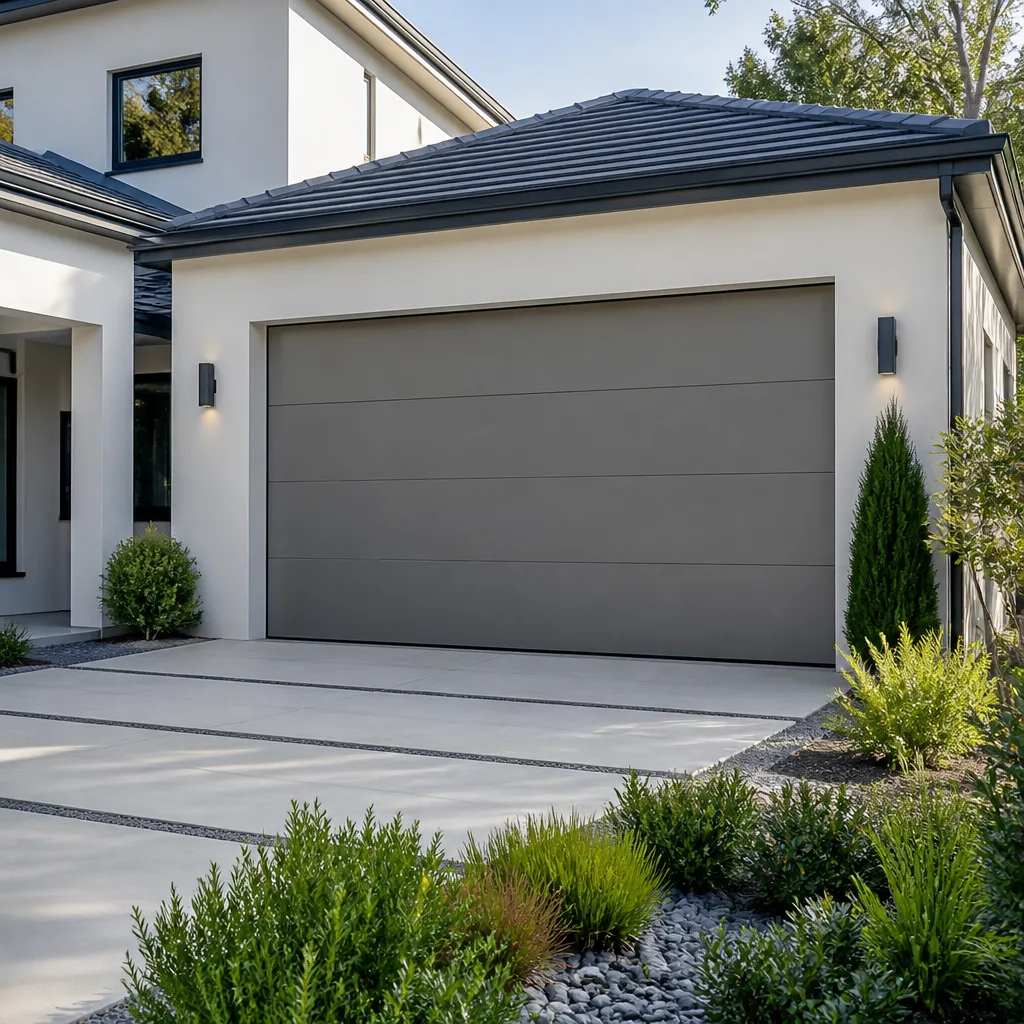 Modern flush
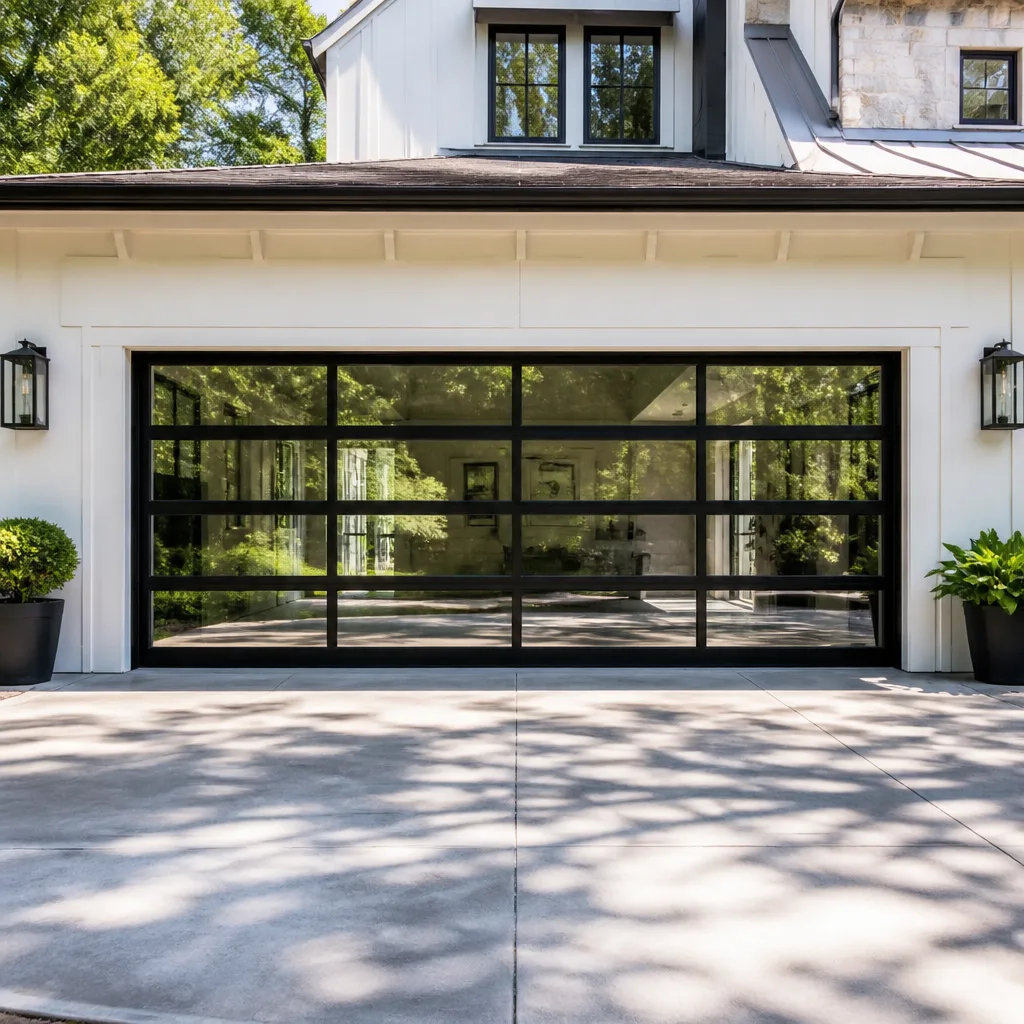 Full-view glass
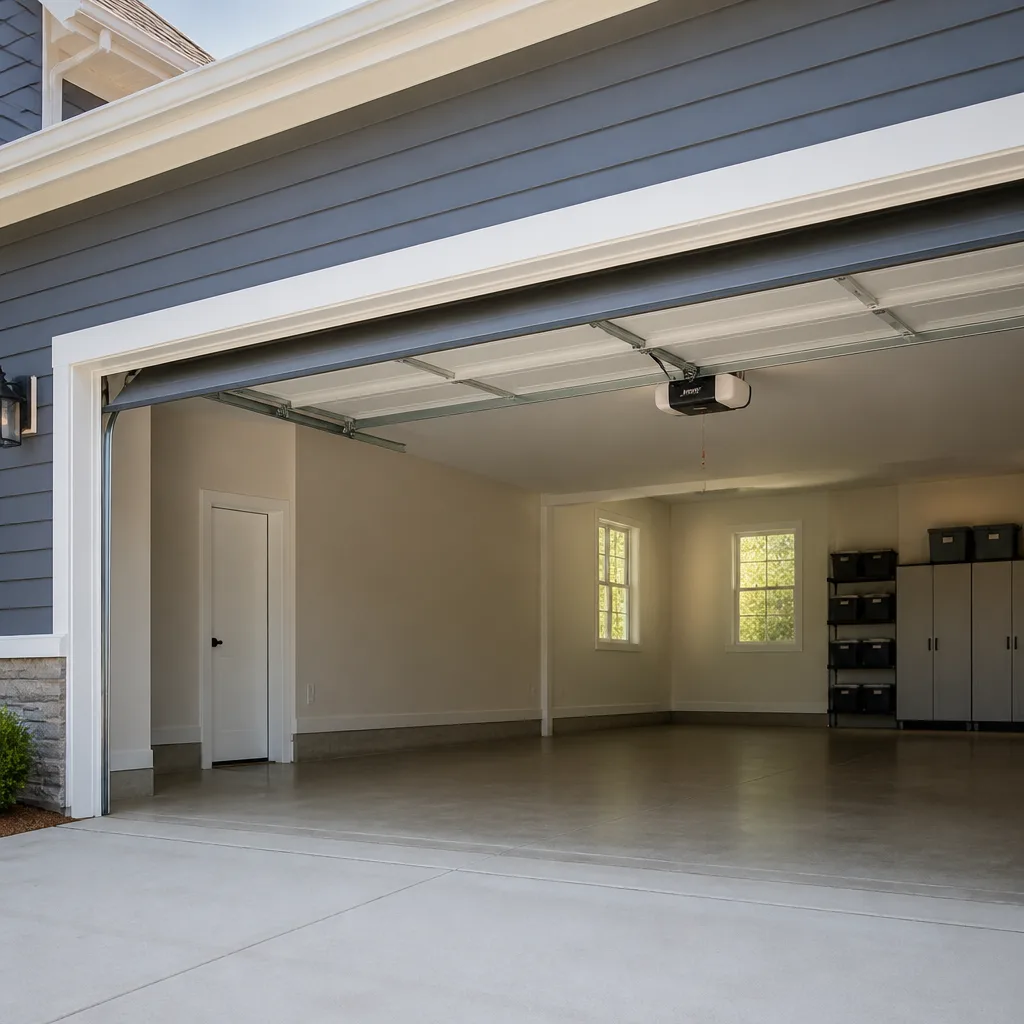 LiftMaster openers
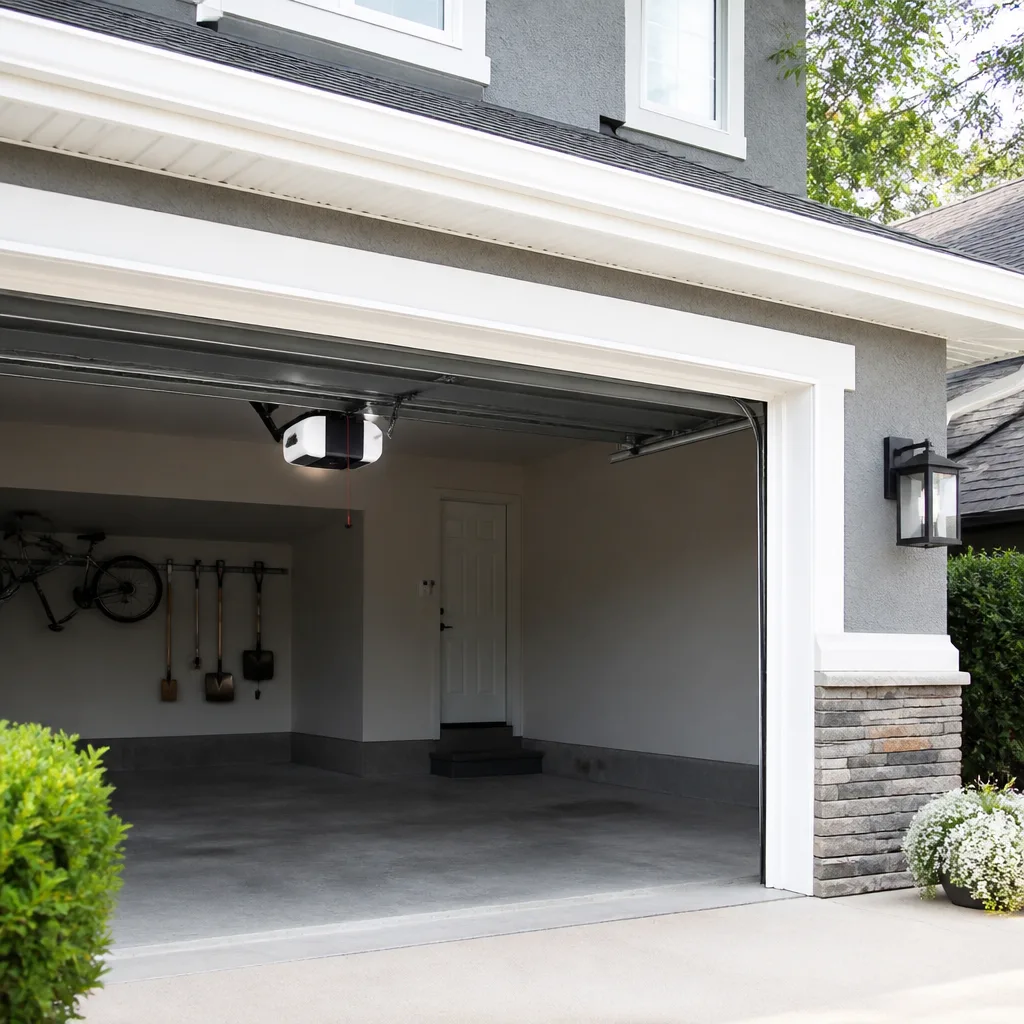 Chamberlain openers
Full 25-point door and opener safety check with every visit - springs, cables, rollers, tracks, and your LiftMaster or Chamberlain opener included
You get a price before we start. It does not change when the pro arrives.
Get your free estimateThe Complete Guide to Garage Doors in Killeen
Killeen homeowners replace garage doors at a higher rate than the national average, and it isn’t because the doors are cheaper here. It’s because the people buying them are often first-time owners who inherited a door installed for the previous tenant and have no idea what brand, age, or spring type they’re living with. Mix in a steady tide of PCS moves through Fort Hood, Central Texas heat that ages weatherstripping faster than the manufacturer’s timeline, and limestone-heavy soil that shifts foundations, and you get a housing stock where door knowledge matters more than in most towns. This guide walks you through identifying what you actually have, what fails first in Killeen, and when to call.
Quick Answer
A garage door in Killeen is a mechanical system with three wear points that fail on different schedules: springs (7 to 10 years of use), the opener’s drive system (10 to 12 years), and the bottom seal and weatherstripping (often under 3 years in our heat). The right fix depends on which one you’re facing, and a door that won’t open isn’t always a door problem. The sections below walk through diagnosis, era-by-era door identification, and how to know when repair makes more sense than replacement.
Styles & brands we work with
- Raised-panel steel
- Carriage house
- Modern flush
- Full-view glass
- LiftMaster openers
- Chamberlain openers
Table of Contents
- How Do You Identify What Garage Door You Actually Have?
- Spring Configurations in Killeen: What to Know Before You Pay for Repair
- Why Killeen’s Heat Cycles Wear Out Door Seals Faster
- Killeen Garage Doors by Housing Era: 1990s Subdivisions vs. Post-2010 Builds
- How PCS Moves Create Maintenance Gaps
- Which Garage Door Repairs Are Legal for Homeowners in Texas?
- Opener Brands You’ll Find in Killeen Homes
- Repair or Replace? How to Decide
How Do You Identify What Garage Door You Actually Have?
Before you call anyone, find three labels: one on the door, one on the opener, and one on the spring if it’s still legible. That ten-minute step saves you from repeating “I don’t know, it’s just a garage door” to whoever answers the phone.
Here’s how to find each one:
- The door label. Look on the inside face of the bottom panel or the inside of the left or right vertical stile. Manufacturers print brand, model number, and sometimes a date code there. Doors installed by volume builders sometimes have the label painted over or removed during a repaint, which is why the style and panel construction matter as backup identification. Clopay doors, for example, use a distinctive raised-panel profile that’s recognizable without a label.
- The opener model plate. On the motor head, usually the back or the side facing away from the door. LiftMaster and Chamberlain plates list the model and sometimes a manufacturing date. Genie units have the plate in a similar spot but in a different format.
- The spring. Extension springs run parallel to the horizontal tracks on each side. Torsion springs run on a shaft above the door. If the spring is wound on a bar centered above the door opening, it’s torsion; if it’s stretched along the side tracks, it’s extension. The wire diameter and length matter more than any painted color code, and the color code fades.
If the door has a walk-in entry from a service door, check for a second label on the inside of the top section. If sellers or landlords never handed over documentation, those labels are your only reliable identifier. Never touch the springs to measure them yourself. Torsion springs are under enough tension to cause serious injury, and extension springs can fail violently even when the door is down. Read the label, don’t handle the spring.
Once you have the brand and model, the rest of the diagnosis gets much more useful. Whether you’re calling about garage door repair or just trying to plan ahead, knowing your system is the first step.
Spring Configurations in Killeen: What to Know Before You Pay for Repair
Most garage doors in Killeen use either two extension springs (one per side) or one or two torsion springs on a center shaft. Torsion is the modern standard for single doors and nearly universal on double doors built after 2000. Extension springs still show up on older builds and on some single-car doors where the installer went with the cheaper option.
The repair conversation changes based on which system you have:
- Extension springs. Usually sold in pairs because they wear at the same rate. Some newer extensions include a safety containment cable running through the center; older ones may not, and that’s worth flagging during inspection.
- Torsion springs. Typically one spring on lighter doors, two on heavier double doors. When one fails on a two-spring setup, many installers recommend replacing the pair since the second is nearly as worn.
- Cycle life. Springs are rated in cycles, not years. A standard spring is commonly rated for 10,000 cycles; high-cycle options go further. Anyone who opens and closes a door four times a day uses about 1,460 cycles a year, which is where the seven-to-ten-year figure comes from.
This is the safety caveat we can’t skip: torsion and extension springs are under extreme tension, and adjusting, releasing, or even removing them without proper tools and training can cause serious injury or death. A trained technician uses winding bars and follows a specific sequence. Homeowners sometimes find YouTube videos that make it look easy. It isn’t. If you hear a loud bang from the garage and the door won’t lift, the spring has likely broken and the safe move is to leave the door closed and call.
For a broken spring in Killeen, Archer Garage Door Repair handles both configurations, and we’ll tell you whether the second spring is close enough to end-of-life that replacing it now saves a second visit later.
Why Killeen’s Heat Cycles Wear Out Door Seals Faster
The bottom seal on a garage door is a rubber or vinyl strip that most manufacturers rate for roughly five years. In Central Texas, we regularly see them fail in two to three. The reason isn’t the rubber itself; it’s the thermal swing.
Killeen summers routinely push past 100°F on the pavement in front of a west-facing garage door, and the door face absorbs that heat all afternoon. The bottom seal, tucked against a concrete floor that stays cooler, ends up sandwiched between two very different temperatures. It expands, contracts, and hardens with every day’s cycle. Add the UV exposure through a west-facing opening and the seal cracks well before the printed service life.
What to check, without removing anything:
- Run your hand along the bottom seal on a cool morning. If it feels stiff, cracked, or leaves a black mark, it’s time.
- Close the door and look for daylight at the corners. Gaps let in water during heavy rain and small animals during dry spells.
- Look at the stop molding on the sides and top. Painted wood stop molding that’s peeling and checked needs replacing more often than the bottom seal.
- Check the threshold. If the concrete has cracked or settled at the door edge, the seal can’t make contact no matter how new it is.
This is one of the cheapest items on the door and one of the highest-impact. A hardened seal lets water onto the slab edge during thunderstorm season and lets insects and rodents in year-round. If your door’s bottom seal has gone stiff, that’s a job worth doing before the next storm cycle. It’s also one of the few garage door fixes that doesn’t touch the spring or the opener.
Killeen Garage Doors by Housing Era: 1990s Subdivisions vs. Post-2010 Builds
The door you have depends heavily on when your neighborhood was built, and Killeen has a lot of range.
1990s subdivisions
Homes from the 1990s typically have single-layer steel doors, 1-3/8″ thick, with 25-gauged face panels that show a visible crease when they’re dented. Insulation was often absent or limited to a styrene backer added after market. Extension springs are common on earlier 90s builds, torsion on later ones. The opener is usually an older chain-drive, sometimes with a single button wall control and no safety reversal sensors if it predates the early-90s safety standard. If your door dates to this era, expect to find:
- Extension springs without containment cables
- Original 10-year-rated springs, now well past that
- A chain-drive opener with a noisy motor, sometimes missing a working photo-eye sensor
- Painted steel faces with dents that can usually be straightened but not fully erased
Post-2010 builds, especially near Fort Hood
Newer construction near Fort Hood tends toward insulated two-layer or three-layer steel doors, 2″ thickness, with torsion springs rated for higher cycle counts. Panel styles shifted to carriage-house looks and raised-panel designs. Openers are almost always belt-drive for quietness, usually with Wi-Fi or smartphone control features. If your home is post-2010, your maintenance schedule is longer, but not skip-able: the seal still ages in our heat, the opener’s belt still stretches, and the safety sensors still drift out of alignment after summer heat pushes the slab.
If you’re not sure which era your door belongs to, the door panel profile is the fastest tell. Single-layer steel doors flex slightly under pressure; insulated doors feel solid and cold. Knowing which one you have shapes how we talk about replacement options versus repair.
How PCS Moves Create Maintenance Gaps
Killeen’s military community turns over housing at a much higher rate than most markets, and the doors get quiet, deferred wear because of it. Here’s a pattern we see often: the previous occupant’s door worked fine when they moved out, then sat untouched for the weeks or months between occupants. Small problems that would have been caught by routine use, like a slightly misaligned sensor or a stretched belt, become obvious failure points the first week the new owner is in.
When you buy or rent in Killeen, run these checks before negotiating on the house:
- Open and close the door three or four times with the wall control and the remote. Listen for grinding, popping, or uneven travel.
- Pull the red emergency release handle and lift the door manually. A properly balanced door goes up with one hand and stays put when released halfway. If it drops, the springs or cables need attention.
- Walk across the safety beam (the two small photo-eyes at the bottom corners of the opening). The door should reverse. If it doesn’t, the sensors need attention.
- Look at the spring color code and count the springs. Photograph both.
- Open the opener housing cover if you safely can and check the belt or chain tension. Sagging belts are cheap to fix; a stripped gear inside the opener is not.
- Inspect the bottom seal and stop molding. Hardened rubber and cracked wood mean the last owner didn’t maintain them.
If you’re renting, have the landlord put any of these issues in writing before you sign. If you’re buying, they’re legitimate negotiation items. If you’re already moved in and just discovering them, the fix is usually routine.
Which Garage Door Repairs Are Legal for Homeowners in Texas?
Texas doesn’t restrict garage door work to licensed contractors the way it does electrical, plumbing, and HVAC. A homeowner can legally replace their own bottom seal, adjust their own safety sensors, or even swap out a wall control. There’s no state license that specifically covers garage door repair. City of Killeen building permits may be required for structural changes that involve header or framing modifications during a full door replacement, and it’s worth calling the city’s building department for details specific to your project.
Legal, however, isn’t the same as safe. Our honest breakdown:
- Safe for a careful homeowner: replacing the bottom seal, cleaning and adjusting photo-eye sensors, replacing the wall control, lubricating hinges and rollers, tightening the track bolts, replacing the opener’s battery backup.
- Borderline – possible but easy to get wrong: replacing rollers, adjusting the up and down travel limits on the opener, resetting an opener after a power outage. The risk isn’t injury, it’s creating a new problem while fixing the old one.
- Don’t do this yourself: winding, releasing, or adjusting torsion springs; removing or reinstalling extension springs; replacing cables or drums; structural work on the door panels or header.
If your door is on a multi-family property or a rental, the legal question changes. Landlord-tenant rules in Texas generally put repairs on the landlord, and doing your own fix in a rental can complicate your lease. Check with your landlord or property manager before touching anything beyond a bulb replacement.
When the fix touches the springs, cables, or the opener’s electronic drive, that’s where a trained technician’s toolkit matters. For that side of the system, garage door opener repair is a job we handle directly.
Opener Brands You’ll Find in Killeen Homes
Every brand has its own failure pattern, and knowing yours narrows the diagnosis quickly. In our work across Killeen, four brands come up constantly:
LiftMaster and Chamberlain
These two share a parent company and many internal parts. Chain-drive units in the 1990s-era homes have a motor capacitor that fails with age, showing up as “the opener clicks but doesn’t move.” Belt-drive units from the 2010s usually need belt tensioning or a fresh logic board after power flickers. If your wall control says LiftMaster, most of what you’re hearing is a pattern we recognize.
Genie
Common in older Killeen builds. The screw-drive models are workhorses but get noisy when the carriage wears; the chain-drive Genie units often need a fresh limit switch. Genie remotes have some compatibility quirks with universal replacements, so confirm the model before buying a new remote online.
Clopay
Clopay makes doors, not openers, but their door styles are all over the housing here, especially post-2010. Recognizing the panel profiles speeds up a replacement conversation because we know which panel widths and colors are still stocked at the manufacturer.
Whether your opener is a Craftsman unit from a big-box store or a high-end Clopay door mounted with a LiftMaster, we work on all four without pushing a replacement. A 12-year-old chain-drive opener that runs cleanly has plenty of life left. A two-year-old belt-drive that’s stripped its plastic gear inside the housing is a replacement conversation.
Repair or Replace? How to Decide
Most repair-versus-replace decisions come down to three questions: how old is the system, what’s failing, and what does the surrounding door look like?
Here’s the decision path we use with homeowners:
- One part failing on a 5 to 8 year old door? Repair. Springs, openers, and seals are wear items; replacing a door because a spring broke is a waste.
- Multiple failures at once? Two springs, a cracked panel, and an opener that strains to lift usually add up to more than a replacement. Weigh the repair estimate against a new door.
- Visible panel damage on a 20+ year old door? Replacement usually makes more sense than chasing matching panels.
- Safety reversal failing even after sensor adjustment? That’s a functional floor; replacing the opener is often the cleaner path than chasing electronics.
- Door is manual, and you’re ready for an opener? Confirm the door’s balance and spring condition first. An opener bolted to an unbalanced door wears out fast.
We’ll tell you which one actually makes sense for your situation, not which one makes more money. That’s the whole point of a specialist: the recommendation is based on the door’s history, not on a generalist’s service menu. When it’s time to look at replacement rather than repair, that’s the moment to plan.
Common Mistakes to Avoid
- Skipping the label search. Most homeowners call without checking the door or opener label, then spend the first five minutes of the call describing the sound instead of the model. Two minutes with a phone flashlight saves the whole conversation.
- Treating a broken spring as an opener problem. When a spring fails, the opener can still run (or click, then stop, because the force sensor cut it out). Replacing the opener doesn’t fix the door. Diagnose the door first.
- Assuming the previous owner’s door was properly maintained. In Killeen’s high-turnover neighborhoods, “it worked when we left” often means maintenance stopped at the last move. Do the six-point inspection on move-in, not on the first failure.
- Ignoring the bottom seal through summer. A hardened seal left alone through a second summer starts letting water onto the slab edge. Repainting the door while the seal still leaks just hides the problem.
- Buying a universal remote without checking the opener’s model. Some openers use rolling-code technology, some don’t, and the wrong remote will pair or fail depending on the year. Confirm the opener before you buy.
- Letting a wobbling door keep running. A loose hinge, worn roller, or bent track doesn’t always fail in an obvious way. It grinds slowly, wears the opener’s drive more each cycle, and shortens the life of every nearby part.
- Dismissing a permit question during a full door swap. The City of Killeen may require a permit if structural framing changes are part of the install. A quick call to the building department answers this for your specific project in about two minutes.
See the difference
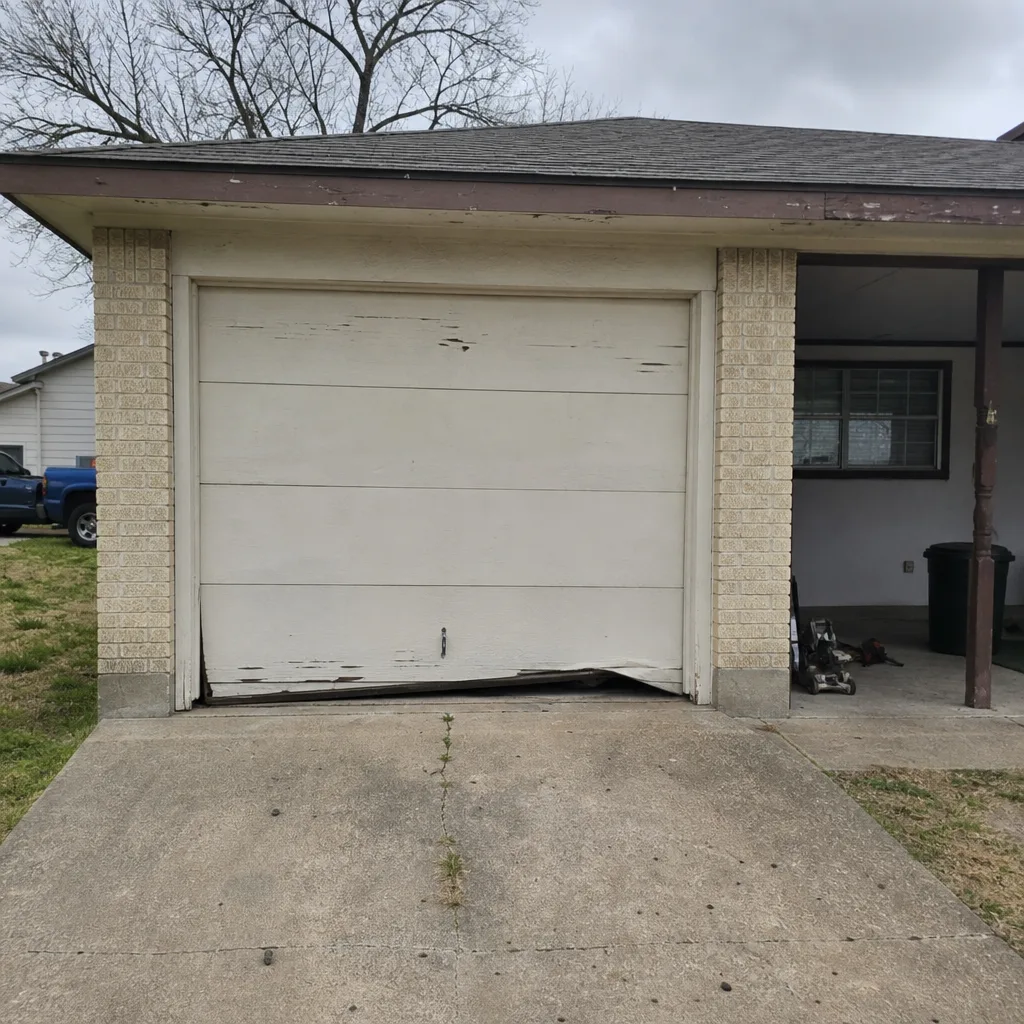 Before
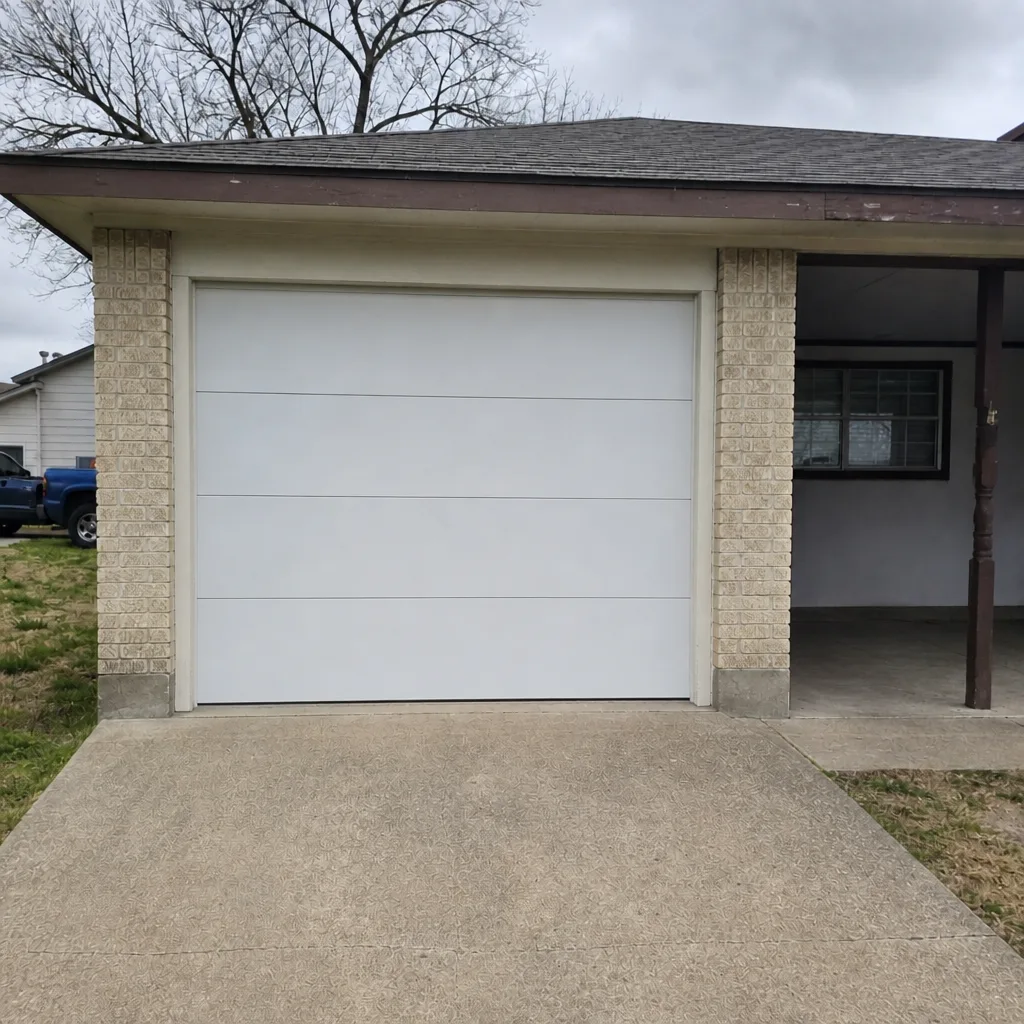 After
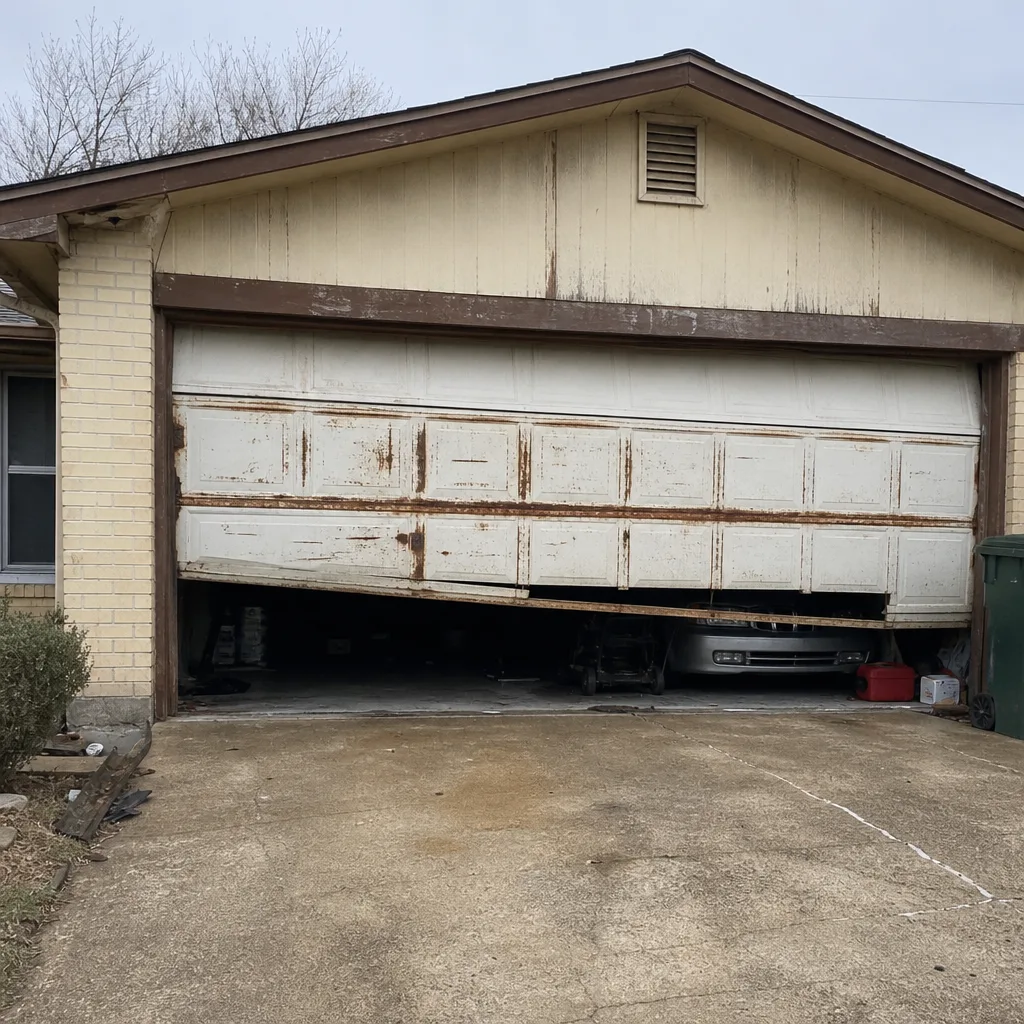 Before
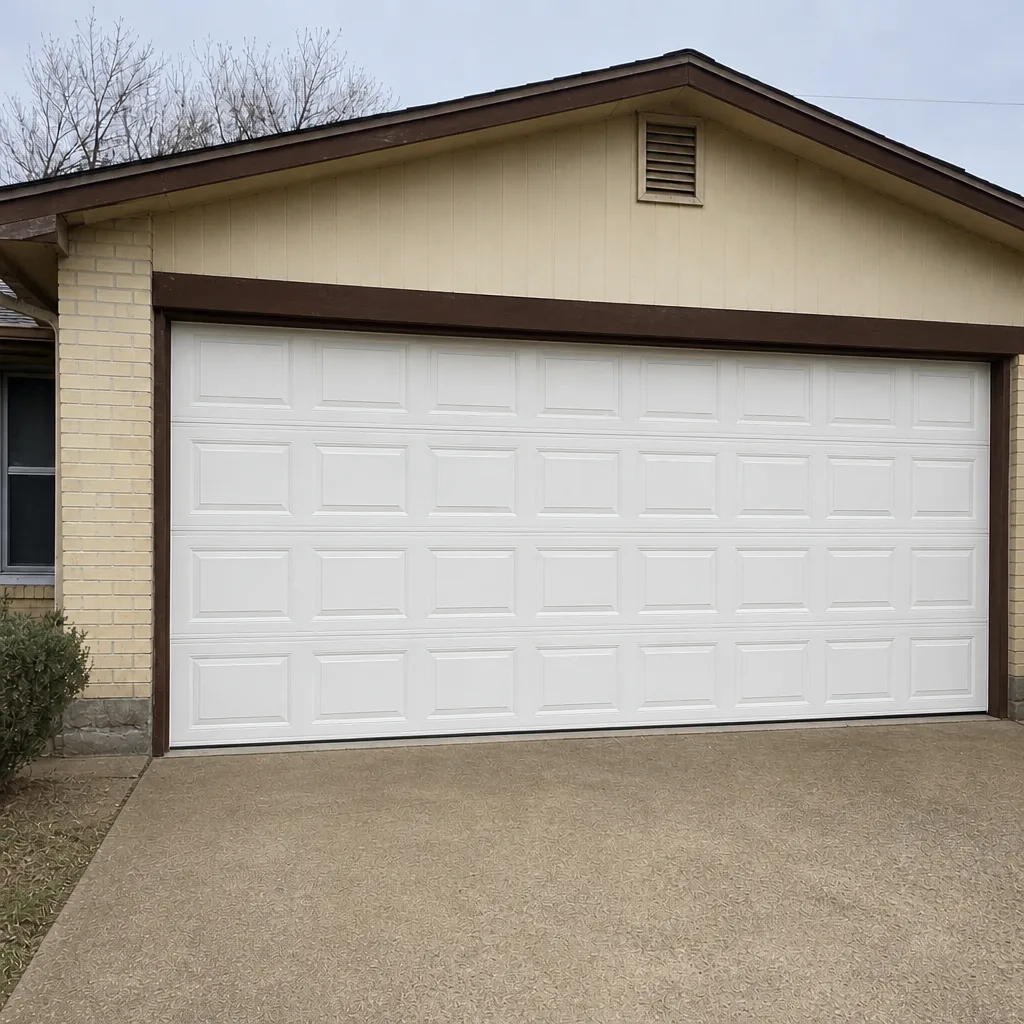 After
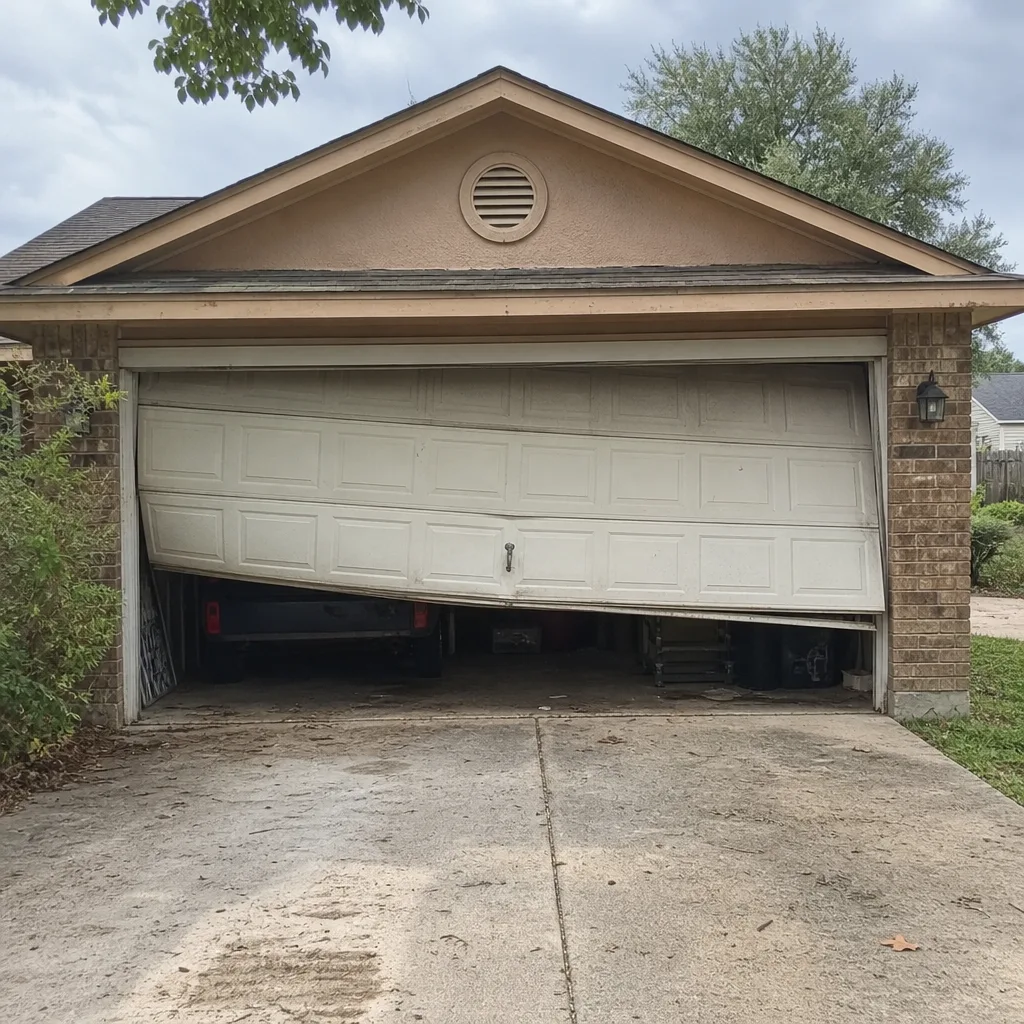 Before
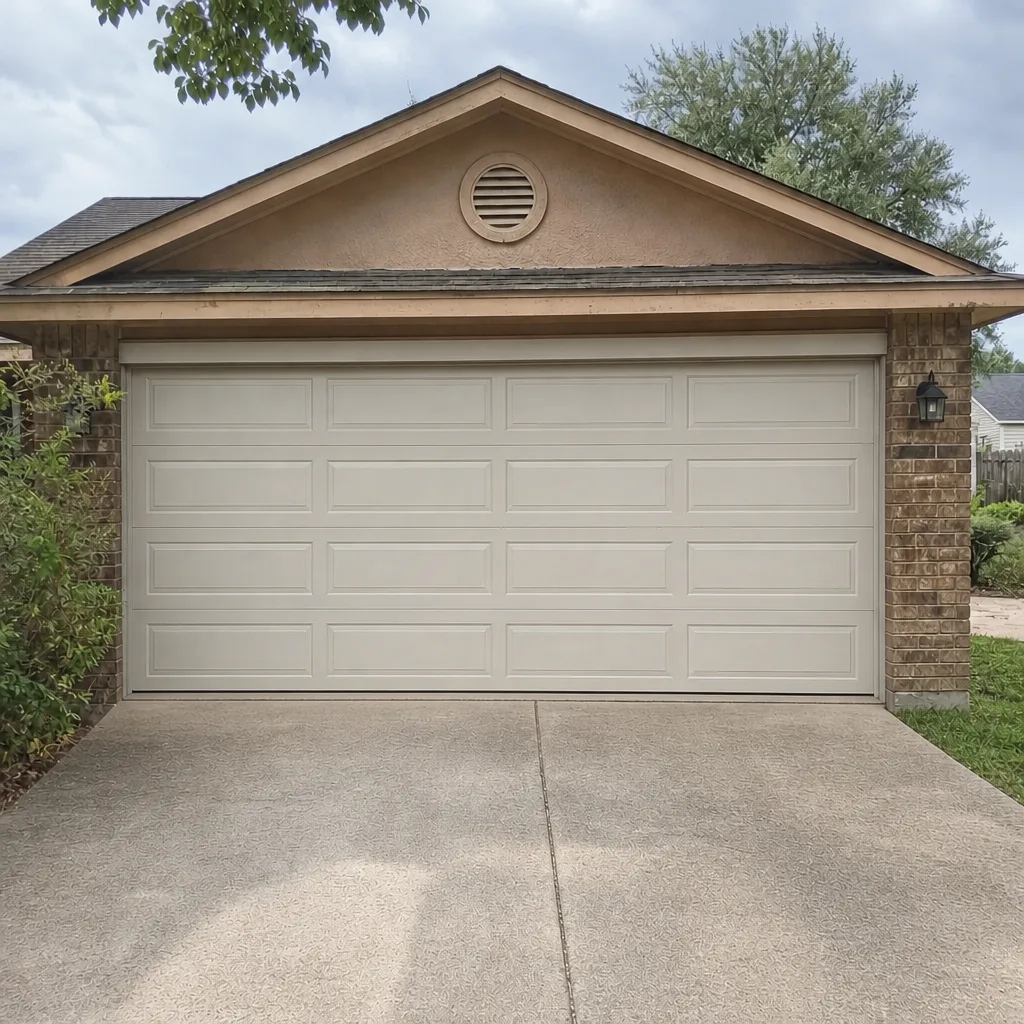 After
When to Call a Professional
Some issues are worth a call the same day. A broken spring, a door that’s come off one track, a garage door that won’t close and won’t reverse, or any noise that sounds like metal snapping are all cases where the door is under tension in a way that isn’t safe to investigate without proper tools. Same for a door that’s hanging unevenly by more than an inch at one corner; that usually means a cable has slackened or slipped, and continuing to run the opener can bend the panel or the track.
Others can wait for a scheduled visit. A door that’s just noisy, a bottom seal that’s cracked but still intact, an opener that won’t answer the remote but responds to the wall control, and a door that’s due for a lubrication and inspection all fall in that category. When in doubt, describe the symptom on the phone and we’ll tell you whether it’s a today problem or a this-week problem.
Killeen homeowners can get a free estimate by calling (833) 719-3738. We answer 24/7, with fast dispatch from 7am to 7pm, Sunday through Friday. We serve homes across Killeen, including the neighborhoods nearest Fort Hood and the west-side subdivisions off Stan Schlueter.
Frequently Asked Questions
Check the inside face of the bottom panel or the inside of the left or right vertical stile for a manufacturer label; it usually lists brand, model, and a date code. If it’s been painted over, the door’s panel profile is the next best identifier, since Clopay and other major brands use distinct styles. If you still can’t tell, snap a photo of the door’s inside panel and the opener’s model plate and we can usually narrow it down.
Standard springs are rated for about 10,000 cycles, which works out to roughly seven to ten years for a typical household that opens the door four times a day. Killeen’s heat doesn’t change the spring’s cycle rating, but it does age the surrounding rubber and plastic faster, so a door from the 1990s may be on its second set already. A technician can measure the remaining spring wire gap to estimate life left.
The bottom seal typically fails in two to three years here, versus the five-year figure on most manufacturer labels, because of the daily heat swing. The seal sits between a hot door face and a cooler slab, expands and contracts daily, and hardens well before the printed timeline. If the rubber feels stiff or leaves a black mark on your hand, it’s past due. Call (833) 719-3738 for an estimate on replacement.
Texas lets homeowners legally handle non-structural work like bottom seals and sensor adjustments, but anything that touches the torsion springs, cables, or drums is a serious injury risk and shouldn’t be a DIY job. City of Killeen permits may be required if structural framing changes during a full replacement; check with the city’s building department. For spring, cable, and opener electronics work, call a trained technician.
Run the six-point check: open and close it a few times to listen for noise, pull the emergency release and lift manually to test balance, walk across the safety beam, photograph the spring color code, check the belt or chain tension, and inspect the bottom seal. Any of these failing is a legitimate item to fix before you settle in.
Home warranty coverage varies by plan; springs and openers are sometimes covered, sometimes excluded as “wear items.” Read your policy’s exclusions or call the warranty provider before paying out of pocket; if the warranty won’t cover it, a free estimate from us tells you what the repair actually runs. Call (833) 719-3738 to schedule.
The Bottom Line
Killeen’s garage doors are shaped by three forces: the heat, the housing turnover, and the limestone underneath. Identify what you have before anything else. Read the labels, note the spring type, photograph the opener plate. Once you know the system, the rest of the maintenance calendar falls into place: bottom seals every two to three years, springs at the end of their cycle life, openers at ten to twelve years, and a routine lubrication and inspection in between. Whether it’s repair or replacement, a specialist who works on garage doors and nothing else will diagnose faster, advise more honestly, and be right more often than a generalist. garage door repair is our trade and only our trade.
Call (833) 719-3738 for a free estimate. We answer 24/7, with fast dispatch from 7am to 7pm, Sunday through Friday.
Written by the team at Archer Garage Door Repair.